


About Maragheh - پورتال انگلیسی
Introduction to Maragheh : The Garden City of Iran
Location and General Information
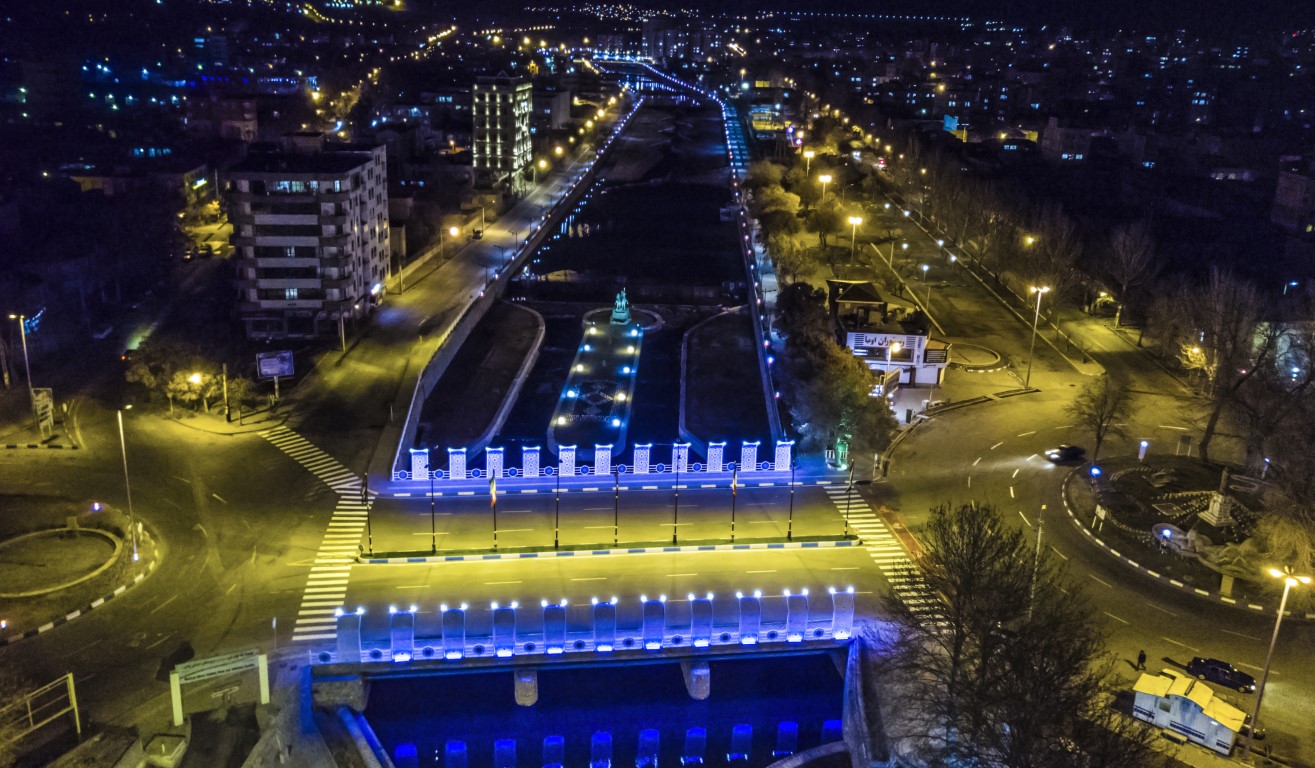
Maragheh is the second-largest city in East Azerbaijan Province and the largest, most attractive, and most historic garden city in the southern part of the province. It lies along the Sufi Chai River, 140 km south of the provincial capital, Tabriz. According to the 2016 census, the city has a population of approximately 175,255, predominantly Azerbaijani‑Turkish‑speaking Shiite Muslims. Historically, Armenian was also spoken among the local Armenian community.
Situated southwest of East Azerbaijan, east of Lake Urmia, and on the southern slopes of Mount Sahand, Maragheh is bordered by Tabriz County to the north, Hashtrud to the east, Miandoab to the south, and Bonab to the west. If you draw a circle around Mount Sahand, Tabriz lies on its northern arc, while Maragheh is located exactly opposite, on the southern arc—about a two‑hour drive apart.
Essential Information
- Area code: 041
- Distance from Tehran: 590 km
- Overland travel time: ~6 hours 40 minutes by car
- Flight time: 1 hour 20 minutes
- Train travel time: 10 hours
Access to Maragheh:
By Air
Sahand Airport, the only airport in southern East Azerbaijan, operates flights primarily on the Tehran–Maragheh route. For travellers from other cities, flying to Tabriz and then continuing overland (140 km, about 2 hours) is a convenient option.
By Road
- From Tehran: Take the Tehran–Karaj freeway via Qazvin and Zanjan (approx. 590 km, 6.5 hours by car).
- From Western cities (e.g., Sanandaj): Pass through Divandarreh, Saqqez, Bukan, Miandoab, Malekan, and Bonab (approx. 350 km, 5.5–6 hours).
- From the South (e.g., Bandar Abbas): Travel via Sirjan, Shahr-e Babak, Yazd, Nain, Kashan, Qom, and Zanjan (approx. 1,770 km, ~20 hours).
- From the East (e.g., Birjand): Route through Kashmar, Sabzevar, Shahroud, Tehran, and Zanjan (approx. 1,710 km, ~19 hours).
Long‑distance buses are also available, with the main terminal at Basij Square (5‑hectare area, 3,100 m² built space, offering restaurants, taxi services, prayer room, Wi‑Fi, and green space).
By Rail
Maragheh’s railway station was inaugurated on 6 October 1956 with the arrival of the first train. Currently, over five passenger trains run daily to Tehran and Mashhad. A 180‑km line connecting Maragheh to Urmia is under construction, which will eventually link the city to the European rail network.
Historical and Cultural Highlights
Maragheh Observatory
Founded by the renowned scholar Khajeh Nasir al‑Din Tusi under the Ilkhanid ruler Hulagu Khan, the Maragheh Observatory was not merely an astronomical centre but a comprehensive scientific institution. It hosted distinguished scientists of the era, including Qutb al‑Din Shirazi (who explained the cause of rainbows) and Chinese scholars like Fao Munji . Christian philosopher Ibn al‑Ibri also taught Euclid and Ptolemy there.
The observatory’s main building was a cylindrical tower, with auxiliary structures including a library, accommodation, a mosque, a school, and a workshop (possibly a laboratory). The site covers about 510 m in length and 217 m in width. The Ilkhanic Zij (astronomical tables) compiled by Tusi from observations made here remained influential for centuries and were later translated and published in Europe (1356 AD). The oldest manuscript is preserved in the Bibliothèque nationale de France, Paris.
Recent excavations (1970s) by Parviz Varjavand and his team uncovered the foundations. A protective dome has been erected over part of the ruins. The site is listed as a national heritage monument.
Gonbad-e Kabud (Blue Dome)
This Seljuk‑era monument (built between 582–656 AH / 1186–1258 AD) is popularly known as the tomb of Hulagu Khan’s mother. It was registered as a national heritage site in 1932. Nearby stands the **Round Tower** (built 563 AH / 1168 AD), also of Seljuk origin.
Gonbad-e Sorkh (Red Dome)
Constructed in 542 AH (1147–48 AD) in the Razi architectural style, this is one of the oldest Islamic buildings in East Azerbaijan. Its inscriptions name the patron, Abdolaziz ibn Mahmud ibn Sa'd Yadim, and the architect, Bani Bakr Mohammad.
Gonbad-e Ghaffarieh
Built during the Ilkhanid period by Sultan Abu Sa'id Bahador Khan, this square brick structure is inspired by the Red Dome. It features exquisite brick and tilework (black, white, turquoise) and two inscriptions in Reyhan script.
Aghalar Tomb (Stone Inscriptions Museum)
A four‑sided brick building erected in 1175 AH (1761–62 AD) over the grave of Mir Abdolfattah Mousavi Maraghei, a poet and mystic of the Zand era. After restoration in 2002, it was turned into a museum displaying valuable historical gravestones, including marble specimens from the 7th–8th centuries AH.
Maragheh Fossil Zone
One of the world’s most unique fossil areas, hosting diverse extinct mammal remains. Spanning over 40,000 hectares (with 1,026 ha protected as a national natural monument), it has attracted domestic and international palaeontologists for decades and is often called "Iran’s Fossil Paradise".
Historical Mosques and Bridges
- Jameh Mosque of Maragheh (Safavid period): Features a main hypostyle hall (35 wooden columns), a winter prayer hall, and beautiful painted decorations.
- Mithraic Temple (Varvij village): An underground temple from the Sassanid‑Parthian era, once one of the largest Zoroastrian fire temples.
- Mardaq Bridge (Safavid‑Qajar): A three‑arch stone and brick bridge over the Mardaq River, 26 m long and 7 m high, connecting old Maragheh to Hashtrud and Mianeh.
Qizlar Qalasi (Maiden’s Castle) Cave and Fortress
Located 20 km southwest of Maragheh, this rock‑cut fortress and cave sit atop the Köy Dağ (Blue Mountain) at an elevation of ~180 m above the valley. Remains of mud‑brick walls and scattered pottery shards testify to its antiquity.
Hampeuil (Pigeon) Cave
About 15 km from Maragheh, near Tazeh Kand-e Sofla, this cave features a large entrance hall covered with ash. Inside, narrow passages lead to deeper chambers and vertical shafts; the deepest explored drop is 98 m. Caution and proper caving equipment are recommended.
Notable Figures from Maragheh
Khajeh Nasir al‑Din Tusi (1201–1274)
Philosopher, mathematician, astronomer, and founder of the Maragheh Observatory. Author of the Akhlagh-e Naseri and the Ilkhanic Zij , he assembled a multinational team of scholars, irrespective of religion or nationality, to advance scientific knowledge. He passed away in Baghdad in 1274 and was buried in Kazemayn.
Awhadi Maraghei (Rokn al‑Din Abu al‑Hassan, c. 1271–1338)
A Persian‑language poet and Sufi contemporary of Rumi, Sa'di, and Hafez. His Divan includes over 14,700 verses, and his masnavi Jam-e Jam is especially renowned. Another famous work is Manteq al‑Oshshaq (also called Dehnameh ). He composed three ghazals in the Isfahani dialect ( Fahlaviyat ). His tomb is situated in a verdant garden in Maragheh.
Mirza Hossein Karimi Maraghei (1931–2023)
A celebrated contemporary Azerbaijani‑Turkish poet, known for his satirical and religious verse. He published over 350,000 verses in both Azeri and Persian. His sixteen‑volume satirical collection Rangarang is highly popular. He passed away at the age of 92 and is buried in Maragheh.
Heydar Abbasi (Bārīshmāz, 1943–2025)
Poet, painter, sculptor, and translator. He produced complete Azerbaijani‑Turkish translations and commentaries of the Nahj al‑Balagha (3 vols) and Rumi’s Masnavi (6 vols). He was fluent in Turkish, Persian, Arabic, English, French, and Russian.
Natural and Leisure Attractions
Sufi Chai River
This 70‑km river originates from the Sahand slopes, irrigates over 12 hectares of orchards and farmland, and eventually merges with the Simineh and Zarineh rivers before flowing into Lake Urmia. The Alavian Dam, built on the river, is a popular spring and summer destination.
Maragheh’s Gardens and Parks
Known as the "Garden City," Maragheh is surrounded by fertile orchards producing 17 varieties of apples, 26 grape types, 5 almond varieties, and 11 plum varieties, among many others.
Accommodation
- Maragheh Grand Hotel** (4‑star): 68 rooms across 4 floors, originally opened in 1986 and renovated in 2004.
- Alliance Hotel** (2‑star): 15 rooms and suites, conveniently located near the Blue Dome, Ghaffarieh, and the Ilkhanic Museum.
Souvenirs and Handicrafts
Maragheh offers a rich variety of souvenirs, including:
- Baslogh (starch‑based sweet with grape syrup, walnuts, coconut) and **Sajugh** (with almond kernels and cardamom).
- Special Maragheh Halva (grape syrup, walnut, chickpea flour).
- Traditional Soap (natural, chemical‑free).
- Dushab (grape syrup) – a key ingredient in local cuisine.
- Dried fruits and nuts – exported to European countries.
- Sahand Mountain Honey – recognised for its exceptional quality.
- Leather goods – Maragheh is a major leather production and export hub.
- Silk and woollen carpets – silk carpets are mainly exported.
- Handmade pottery and ceramics – a tradition dating back millennia.
- Organic dairy products (local butter, cheese, cream, yoghurt) available from surrounding villages.
- Medicinal herbs and herbal distillates from the Sahand slopes.
Last Updated: June 22, 2026 by Eng. Mohammad Vand Jalili, Website Manager